Quick answer: SEO still matters, but the job has grown. People still search with intent, which makes search traffic some of the best-converting traffic you can get. What's changed is where the answers show up: Google's AI Overviews and AI Mode, ChatGPT, Copilot and Perplexity now answer many questions directly. To show up there, your site has to be crawlable by AI tools, easy for them to understand, and mentioned by other credible sources. Classic SEO is the foundation for all of it.
Every few months someone declares SEO dead. Then you look at where the people who actually buy come from, and search is still near the top.
What's true is that search has changed more in the last two years than in the decade before it. Here's what's different, what isn't, and what a small business should do about it.
Why search traffic is still worth fighting for
Someone who searches "google ads audit checklist" or "white oak dining table" is telling you exactly what they want. You didn't interrupt them, the way an ad on a social feed does. That's why search tends to convert so well.
In the benchmarks I covered in my post on cold ad traffic, Google Search ads converted at roughly 4% to 8%, while cold paid social converted at around 1%. Intent is the whole difference.
And early data suggests visitors who come from AI search may be even more qualified. Ahrefs found that on its own website, AI search sent just 0.5% of visits but produced 12.1% of signups, roughly 23 times the conversion rate of traditional organic visitors (PPC Land on Ahrefs, 2025). That's one site, so treat it as a signal, not a rule. But the logic holds: by the time someone clicks through from an AI answer, they've already done their research.
What AI changed about search
More answers, fewer clicks. Pew Research tracked nearly 69,000 Google searches by 900 US adults. When an AI summary appeared, people clicked a regular search result on 8% of searches, versus 15% when there wasn't one. They clicked a link inside the AI summary just 1% of the time (The Decoder on Pew Research, 2025).
AI is now the default, not an add-on. Google made AI Mode its default search experience in May 2026 (PR Daily, 2026).
People are researching purchases with AI. L.E.K. Consulting found 46% of AI users now start purchase research on a standalone AI platform, up from 25% in 2024, and 71% use AI for travel research (MarTech, 2026).
But it's not all bad news for clicks. Seer Interactive's research found organic click-through rates on searches with AI Overviews rebounded 85% in the first two months of 2026, after steep drops the year before (Seer Interactive, 2026).
The takeaway: fewer people may click, but the ones who do are further along. And if AI tools mention your business in the answer, you can win the customer even without the click.
How AI tools decide what to show
AI answers aren't random. They pull from pages the tools can access and trust. A few things matter most:
- Access. If an AI crawler can't load and read your page, you can't be cited.
- Clarity. Pages that answer a question directly, with clear headings and real specifics, are easier to quote.
- Reputation. Ahrefs studied 75,000 brands and found branded web mentions correlated far more strongly with AI Overview visibility (0.664) than backlinks did (0.218) (Ahrefs, 2025). Being talked about on other sites matters. That's where digital PR comes in.
None of this replaces traditional SEO. It builds on it. A site Google can't crawl or understand won't do well in AI answers either.
Can AI find your site? A checklist
Here's what I check, and what I fixed on my own site this week.
1. Make sure robots.txt isn't blocking AI crawlers
Your robots.txt file tells crawlers what they can access. Some sites block AI crawlers like GPTBot (OpenAI), ClaudeBot (Anthropic) or PerplexityBot, sometimes on purpose and sometimes by accident through a plugin or security setting.
Check: Visit yourdomain.com/robots.txt. A simple "User-agent: * Allow: /" lets everyone in. If you see "Disallow" lines naming AI bots, decide whether that's really what you want.
2. Make sure your content is in the HTML, not just JavaScript
This is the one most people miss. Many modern website builders put the page together in the visitor's browser with JavaScript. Google can usually handle that. Many AI crawlers can't, so they see a mostly blank page.
Check: In Google Search Console, use URL Inspection, then "View crawled page," and look for your actual text in the HTML. In Bing Webmaster Tools, use URL Inspection's Live URL test. If your words aren't there, ask your developer or site builder about prerendering or server-side rendering.
3. Submit your sitemap to Google and Bing
Your sitemap lists every page you want found. Add "last modified" dates so crawlers know what changed.
Don't skip Bing. Its index powers Microsoft's search and Copilot experiences, and Bing Webmaster Tools now has an AI Performance report (in beta) alongside its regular search reports. I set mine up this week, and it was quick.
4. Turn on IndexNow
IndexNow notifies Bing and other participating search engines the moment you publish or update a page, instead of waiting for them to recrawl. Many platforms and plugins support it.
5. Add structured data
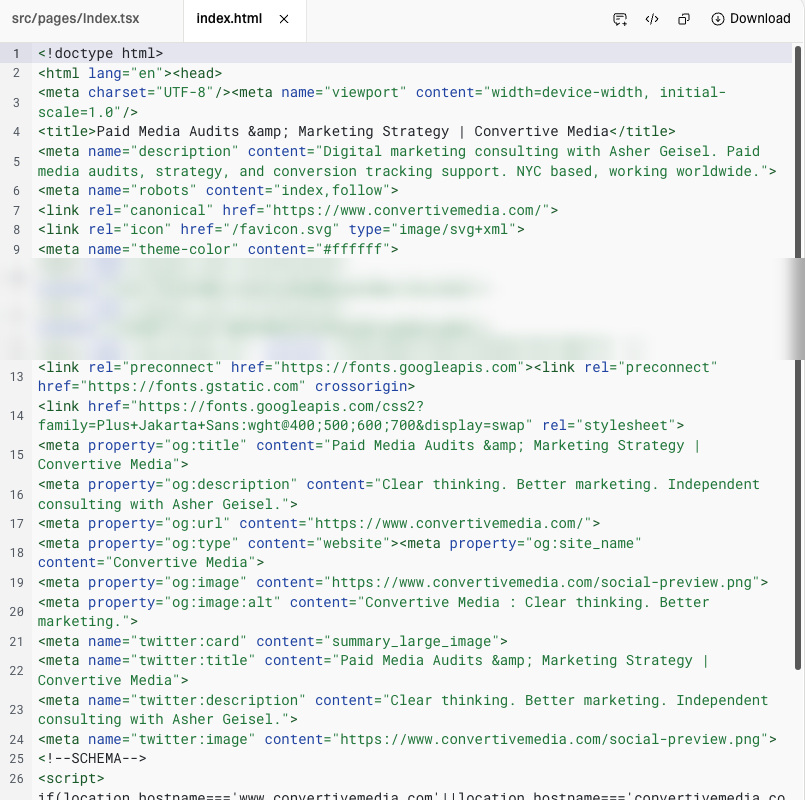
Schema markup tells search engines and AI tools exactly what a page is: an article, a product, a service, an FAQ, your business. Use Article schema on posts, Organization or LocalBusiness on your homepage, and FAQPage where you answer common questions.
6. Write answers, not just pages
AI tools quote content that answers questions clearly. A few habits help:
- Put a short, direct answer near the top of the page
- Use headings phrased as the questions people actually ask
- Include real numbers, examples and dates
- Cite credible sources
- Add first-hand experience nobody else can copy
That last one matters more every year. Generic content is exactly what AI can already write. Your own examples aren't.
7. Consider an llms.txt file
An llms.txt file is a short plain-text summary of your business and key pages, written for AI tools. It's a newer convention and there's no proof yet that it improves visibility. It takes 15 minutes, though, so I added one to my site anyway.
8. Get mentioned elsewhere
Your own site can only say so much about you. Reviews, directory listings, press coverage, podcast appearances and mentions on industry sites all help AI tools (and people) trust that you're real and credible.
What this looks like on a small site
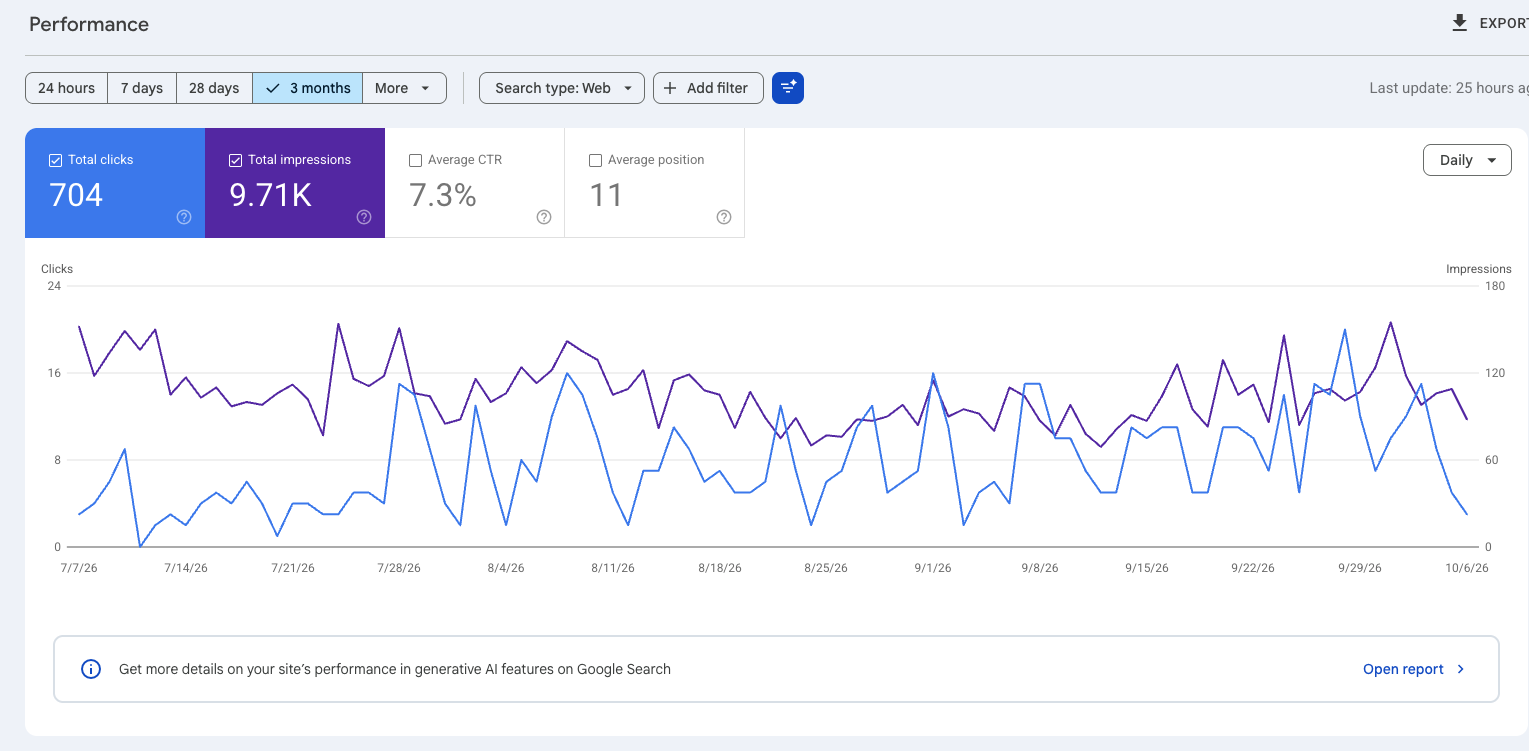
My own site is a good example of starting from close to zero. In its early weeks, Google Search Console showed just a handful of clicks a month. Here's the foundation I've put in place:
- Confirmed robots.txt allows all crawlers, including AI bots
- Confirmed pages show up with full text when crawled
- Added structured data to every page and post
- Added lastmod dates to the sitemap and an llms.txt file
- Set up Bing Webmaster Tools and submitted the sitemap
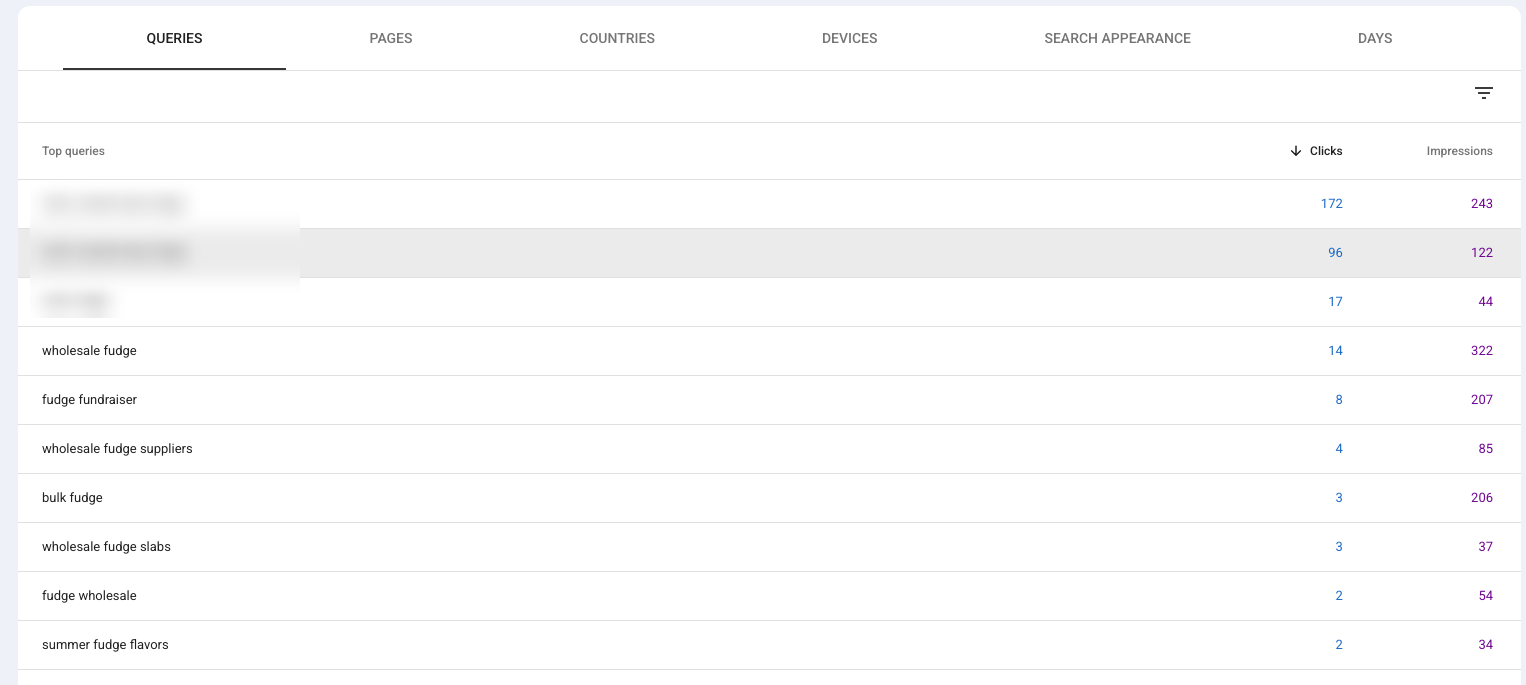
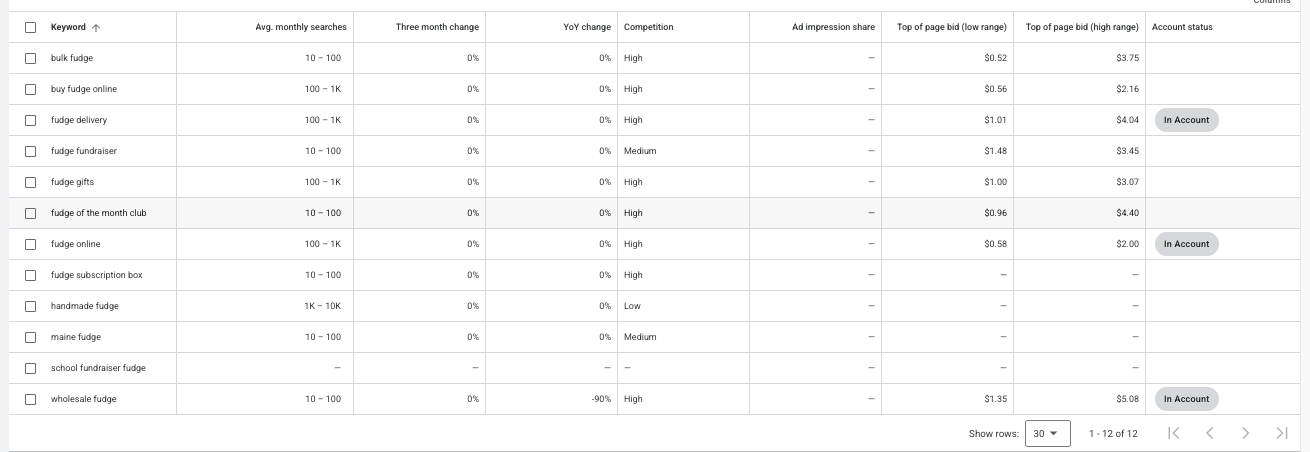
- Started publishing posts that answer specific questions with real examples, based on keyword research for terms a newer site can realistically rank for
It's early, and SEO takes months, not weeks. But the foundation is the part you only have to get right once.
The bottom line
SEO isn't dead. It's broader. The basics still matter: a fast, crawlable site with clear pages that answer real questions. On top of that, make sure AI crawlers can read your content, and build a reputation beyond your own website.
Search will keep changing. Businesses that are easy to find, easy to understand and easy to trust will keep showing up, wherever the answers are.
Want to know if AI tools can find your site? I offer SEO and AI visibility audits for small businesses: crawlability, structured data, content and the keywords you can realistically win. Get a free account check.
FAQ
Is SEO still worth it in 2026?
Yes. People still search with clear intent, which makes search traffic some of the best-converting traffic available. AI search tools also rely heavily on the same signals SEO builds: crawlable pages, clear content and a credible reputation.
How do I get my business mentioned by ChatGPT or Google's AI answers?
Make sure AI crawlers can access your site, put your content in the HTML rather than only in JavaScript, answer questions clearly, add structured data, and earn mentions on other credible sites. There's no guaranteed way in, but these steps make it far more likely.
Should I block AI crawlers from my website?
Most small businesses that want to be found shouldn't. If you block AI crawlers, those tools can't read your content to recommend you. Some publishers block them to protect their content, which is a different situation.
What is generative engine optimization (GEO)?
GEO is the practice of making your content easy for AI tools to find, understand and cite. In practice, it overlaps heavily with good SEO: accessible pages, clear answers, structured data and a strong reputation across the web.
What is llms.txt?
A plain-text file at your site's root that summarizes your business and links to key pages for AI tools. It's optional and not yet proven to improve visibility, but it's quick to add.
How long does SEO take to work?
Usually several months. Technical fixes can show up within weeks, while content and reputation build over 6 to 12 months.
Sources
- Ahrefs study finds AI search visitors convert 23x higher than organic traffic (PPC Land, 2025)
- Pew finds only 1 percent of users click a source link from Google's AI Overviews (The Decoder on Pew Research, 2025)
- The 84% myth: why the PR industry's AI numbers are wrong (PR Daily, 2026)
- The AI shopping stats 2026: what you need to know (MarTech, 2026)
- Seer's 2026 CTR research (Seer Interactive, 2026)
- An analysis of AI Overview brand visibility factors, 75K brands studied (Ahrefs, 2025)